


Why Culture, Collaboration & Kindness Matter More Than Ever at Charterhouse
By Sam robinson, principal deputy head
6 January 2026
charterhouse news
What allows a school not simply to provide an excellent education, but to shape young people in ways that endure for the rest of their lives? Exam results matter, of course, as do facilities and opportunities. But as research into long-standing, world-class institutions makes increasingly clear, true excellence is rarely located in statistics alone.
It is found in the way people behave together - what they value, how they collaborate and the fabric of everyday school life. The culture and climate that underpin the environment in which our pupils work and live is key to their success.
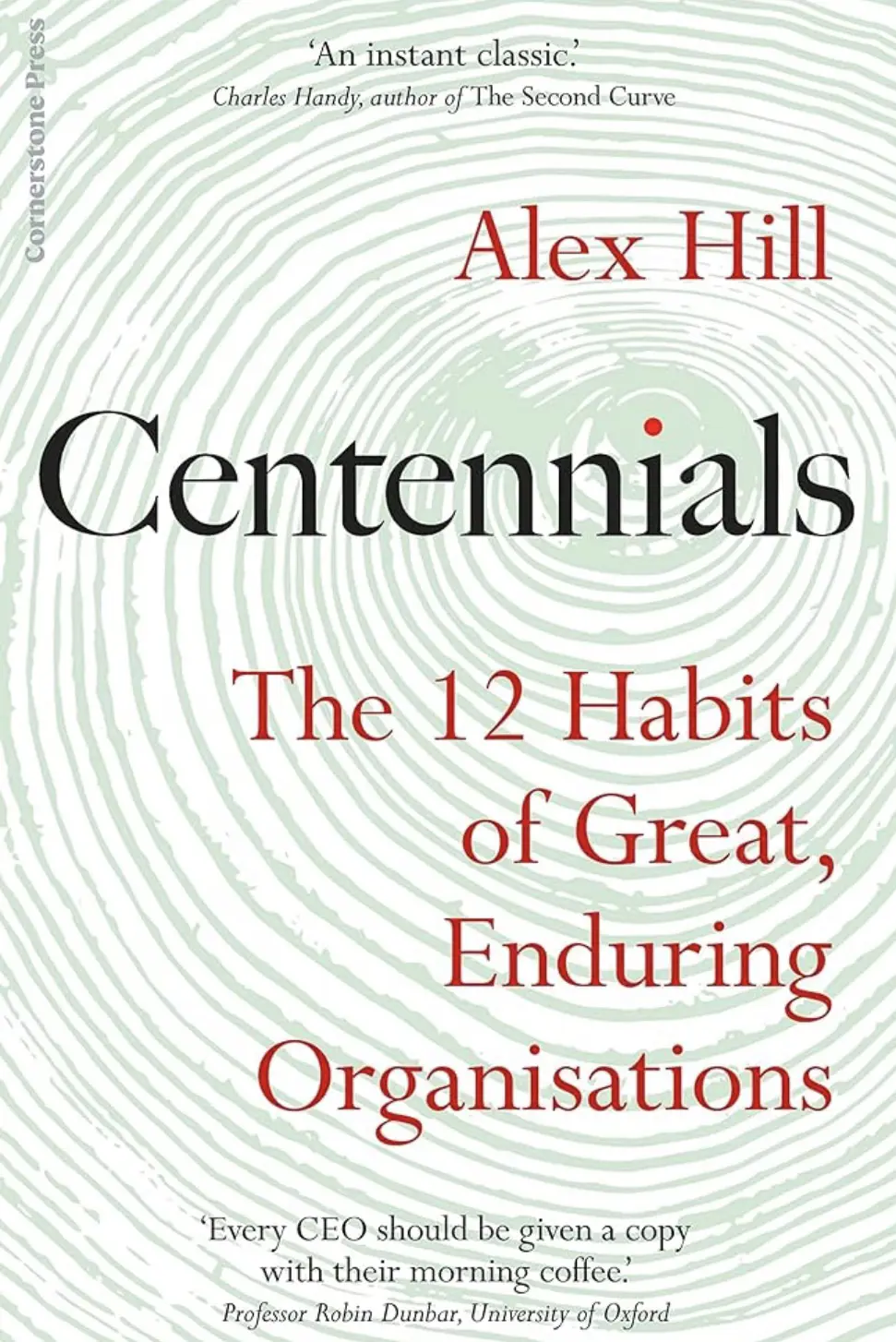
Professor Alex Hill, in his acclaimed book Centennials, studies organisations that have remained leaders for a century or more. His conclusion is stark: longevity and high performance depend less on reinvention than on the cultivation of a distinctive culture; on teams that collaborate deeply; and on a consistency of purpose that survives leadership cycles and social change.
For Charterhouse, a school whose history stretches back over 400 years, these findings feel less like revelations and more like recognitions. They describe precisely what we hold dear - and why our world-class ambition for children and laser-focus on driving excellence is inseparable from the themes that define us: learning with purpose; a culture that encourages pupils to try everything, and a values education with kindness at its heart.
Every school teaches subjects. Far fewer teach purpose. At Charterhouse, learning with purpose means helping pupils understand not just what they are learning, but why. Hill explains that the world’s great centennial institutions thrive because they anchor their people in a shared sense of meaning. Purpose enables coherence.
In an era awash with content and information, purpose also acts as the compass that sets young people on the course towards young adult success. It is the mindset that transforms learning from something to be completed to a lifelong journey. It gives individuals a reason to strive. This is the culture in which Charterhouse’s pupils grow up: one that equips them to ask better questions, make wiser choices, and understand their place and role in a changing world.

If purpose gives a school its direction, opportunity gives it momentum. At Charterhouse, we encourage pupils to try everything: new sports, unfamiliar subjects, music, drama, service projects, leadership roles - experiences that, at first, may seem well outside their comfort zone.
sam robinson, principal deputy head

This is not about frantic busyness; it is about discovery. Adolescence is a time when identity is still in formation. This rich and diverse set of experiences and opportunities gives our young people breadth, confidence and clarity at precisely the age they need it most. By trying many things, pupils begin to find the few that they are talented at and which truly matter to them. We ensure that every Carthusian not only has the qualifications, knowledge and skills they need but also develops a strong sense of their own identity, strengths and interests and the ability to thrive in the world beyond school.
What else will it take to ensure that our pupils are successful in an uncertain and changing world? Agility and resilience are key. Hill’s centennial institutions succeed because they create cultures in which people are allowed, and expected, to explore, to test themselves, to fail, and to grow. Our most famous example of this is our Endurance Challenge - a 50 mile walk across the South Downs from Brighton to Surrey that our sixth formers challenge themselves to complete.
Crucially, this spirit of purpose and “try everything” is underpinned by an ethos of collaboration. Tutors, teachers and coaches talk to each other; they share insights and coordinate opportunities so that each pupil’s programme is both ambitious and sustainable. The message to pupils is clear: you do not have to arrive knowing exactly who you are. The school is here to help you find out - by giving you the space and encouragement to try, and an environment full of rich discussions, connections and diverse influences. Our version of that is a school where it is entirely normal to see a gifted mathematician on stage in a play, a committed musician in the CCF, or a driven athlete volunteering in the community.
Hill argues that consistency is the backbone of every centennial institution: a shared set of habits, expectations and routines that hold firm even as the world around them shifts. At Charterhouse, this consistency is not bureaucratic but human. It stems from our commitment to a values-first education, with kindness unapologetically at the centre.
Some might see kindness as soft. We see it as structural. It governs our climate and culture: how pupils speak to one another, how staff communicate, how decisions are made, and how success is understood. It is the value without which all others quickly collapse.
A school that leads with kindness builds trust - and trust is what allows young people to take intellectual risks, try new activities, admit when they are struggling and seek help. It is what makes “try everything” possible without becoming overwhelming: pupils know that, underneath the challenge, there is care.
Consistency, then, is not about uniformity. It is about reliably modelling the values we wish our pupils to carry into adulthood: decency, courage, curiosity, and that most essential of human qualities, kindness. Without these, nothing else truly matters.
When Charterhouse speaks of driving excellence, we do not mean relentless pressure. We mean something quieter and deeper:
- A purposeful education, in which learning is anchored to meaning and direction.
- A culture that invites pupils to try everything, so they can discover who they are and what they care about.
- A values-led environment, where expectations are consistent and where kindness is not an add-on, but a defining feature of daily life.
These qualities do not appear on exam certificates, yet they profoundly shape the adults that children become. They are what enable a pupil to flourish not just at School, but long after they leave our gates. They are the very essence of what makes a Charterhouse education so special.
Charterhouse has endured precisely because each generation has understood its responsibility to the next. Our core themes of learning with purpose, the invitation to try everything, and unwavering kindness, represent our modern expression of that stewardship. They ensure that while the world changes, the principles that matter most do not.
A centuries-long institution does not build its success on a single moment of brilliance. Sustainable excellence is built, as Hill reminds us, through culture, collaboration and consistency. At Charterhouse, we would add one more ingredient: kindness. Because without it, excellence has no foundation. With it, and with the freedom to try everything, everything else becomes possible.
Professor Alex Hill, author of Centennials, The 12 Habits of Great, Enduring Organisations, presented to Charterhouse staff on Monday 5 January 2026.


